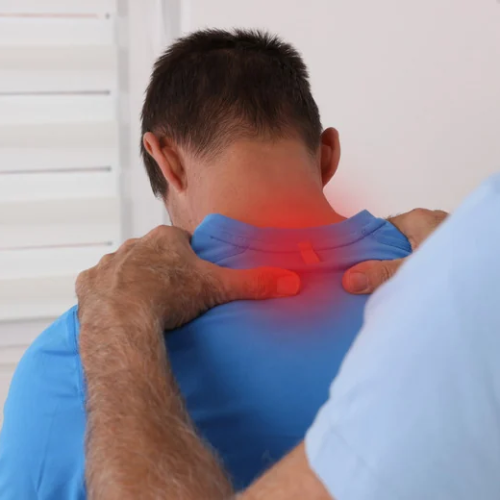

A car accident can interrupt your life long after the vehicles leave the road. You may notice a stiff neck while getting dressed, back pain during your commute, or shoulder discomfort when reaching for something overhead.
Understanding your symptoms is the first step toward getting appropriate care. Below are five common accident-related injuries and conditions—not a statistical ranking—and how the chiropractic care may fit into recovery.
1. Whiplash and Neck Strains
Whiplash occurs when a sudden force rapidly moves your head backward and forward. Rear-end collisions are a familiar cause, but other types of crashes can also produce this injury.
Symptoms may include neck pain, stiffness, headaches, and tenderness around the shoulders. You may also find it uncomfortable to turn your head. Symptoms can develop after the collision rather than appearing immediately.
How we may help: After an assessment rules out injuries requiring other medical care, a chiropractor may recommend appropriate exercises, gentle joint mobilization, or selected manual treatments. The aim is to improve comfortable movement and function. Evidence for manual treatment of some neck-pain conditions is encouraging but varies, and it does not mean every whiplash injury needs manipulation.
2. Lower-Back Strains and Sprains
The force of a collision can strain muscles and tendons or sprain ligaments supporting the lower back. Even ordinary activities—getting out of a chair, bending to put on shoes, or sitting through a meeting—may become uncomfortable.
Back pain after a crash needs an assessment because a muscle strain is only one possible explanation. Pain alone cannot tell you which structure is injured.
How we may help: For suitable patients, conservative care may include activity guidance, therapeutic exercise, and spinal manipulation or mobilization. Research suggests spinal manipulation can produce small improvements in pain and function for some people with low-back pain. However, those findings do not establish its suitability for every traumatic back injury.
A treatment plan should focus on practical goals, such as walking comfortably, sleeping better, and gradually returning to usual activities.
3. Shoulder and Upper-Back Soft-Tissue Injuries
Bracing against the steering wheel or being restrained during a collision can place stress on the shoulder and surrounding tissues. Pain may involve muscles and joints, but a fracture, dislocation, or tendon injury can also require consideration.
Tell your provider if you cannot lift your arm normally, have substantial swelling, or notice a change in the shoulder’s shape. These findings need medical assessment before hands-on treatment.
How we may help: When the problem is appropriate for conservative management, care may involve gentle mobility work, exercises, and advice about modifying painful activities. A chiropractor may also recommend evaluation by another clinician when the findings suggest an injury outside the scope of chiropractic treatment.
The priority is identifying the source of pain before choosing a treatment—not assuming every sore shoulder needs an adjustment.
4. Disc Injuries and Related Nerve Irritation
Spinal discs sit between the vertebrae. An accident may injure a disc or aggravate an existing disc problem. When a nearby nerve is affected, symptoms may include pain traveling into an arm or leg, tingling, numbness, or weakness.
These symptoms warrant assessment. Imaging may be needed when the examination and medical history indicate it, but it is not automatically necessary for every patient.
How we may help: Some patients may be candidates for conservative care coordinated with their medical provider. Treatment choices should depend on the diagnosis and neurological findings. Chiropractic adjustments cannot be assumed to “put a disc back in place,” and manipulation is not appropriate for every disc condition.
New or worsening weakness, loss of bladder or bowel control, or numbness around the groin requires emergency medical evaluation.
5. Neck-Related Headaches After an Accident
A headache after a collision can have more than one cause. Some headaches originate from problems in the neck; others may signal a concussion or another injury. Finding the cause matters before starting treatment.
How we may help: Once an appropriate evaluation identifies a neck-related, or cervicogenic, headache, selected manual therapies may be considered. Research suggests spinal manipulation may reduce the intensity and frequency of some cervicogenic headaches, although results and evidence quality vary. This does not establish chiropractic manipulation as a treatment for concussion.
A headache that worsens or occurs with repeated vomiting, confusion, slurred speech, seizures, or loss of consciousness requires immediate emergency care. Call 911 or go to an emergency department.
What Should Happen Before Treatment?
A useful first appointment starts with your history and an examination. Explain how the crash occurred, when symptoms began, and what activities have become difficult. Bring any emergency-department instructions, imaging reports, and a current medication list.
Before agreeing to treatment, ask about:
-
The likely cause of your symptoms.
-
Recommended treatments and reasonable alternatives.
-
Expected benefits and potential risks.
-
How improvement will be measured.
-
When referral or further testing may be necessary.
Spinal manipulation can cause temporary soreness or increased discomfort, and rare serious complications can occur. Neck manipulation has been associated with tears in neck arteries. Your provider should discuss relevant risks and whether another approach would better suit your condition.
Explore Your Options With Accident Injury 5280
Recovery starts with understanding what your body needs. Whether you are experiencing neck stiffness, back pain, or difficulty moving comfortably, an individualized assessment can help you choose your next step.
Accident Injury 5280 offers personalized chiropractic care and whiplash services, along with a free 10-minute consultation.
Call (720) 735-3121 or visit Accident Injury 5280 to discuss your concerns and schedule a consultation. For emergency symptoms, seek emergency medical care first.