
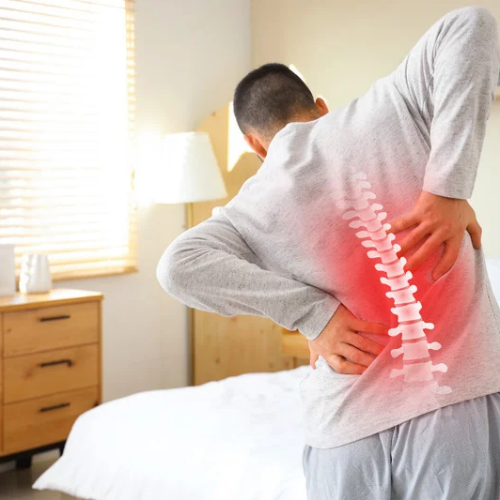
Low back pain can turn simple tasks into daily challenges. Getting out of the car, bending to tie your shoes, or finding a comfortable sleeping position may suddenly become difficult.
The discomfort might begin after lifting something heavy, develop gradually, or follow a car accident or workplace injury. Understanding the possible cause is the first step toward choosing appropriate care.
What Causes Low Back Pain?
Your lower back contains muscles, ligaments, joints, discs, and nerves that work together to support movement. Pain can involve more than one of these structures, and sometimes no single cause can be identified.
Common causes include:
-
Muscle strains and ligament sprains: Lifting, twisting, or a sudden movement can injure tissues that support the back.
-
Disc problems: Age-related changes or a herniated disc can contribute to pain, sometimes by irritating a nearby nerve.
-
Spinal arthritis and narrowing: Changes in the joints or narrowing around spinal nerves can cause discomfort and limit movement.
-
Inflammatory conditions: Certain forms of arthritis can cause persistent back pain and stiffness.
Symptoms may include a localized ache, pain with bending, or discomfort that travels into the buttock or leg. Tingling, numbness, or weakness deserves medical attention because it may indicate nerve involvement.
Low Back Pain After an Accident
A car collision, fall, or workplace accident can cause back pain even when the injury is not immediately obvious. However, pain after an accident should not automatically be assumed to be a simple muscle strain.
The priority is an appropriate evaluation before treatment. A clinician needs to consider how the injury happened, your symptoms, and whether further testing or referral is necessary. Back pain following a serious accident requires emergency medical assessment.
When Can Chiropractic Care Help?
Chiropractic care may be an option for some people with low back pain after an examination determines that treatment is appropriate.
One commonly used technique is spinal manipulation, also called an adjustment. A trained practitioner applies a controlled thrust to a spinal joint. A different technique, mobilization, uses movement without a thrust.
According to the National Center for Complementary and Integrative Health, spinal manipulation may provide small improvements in pain and function for people with short-term or persistent low back pain. Results vary, and it is one of several treatment options rather than a guaranteed solution.
The purpose of care should be practical: helping you move more comfortably and return to daily activities. Discuss your goals, alternatives, and how progress will be measured before starting treatment.
Why an Individual Assessment Matters
Chiropractic adjustments are not appropriate for every cause of back pain. Your provider should review your health conditions, medications, injury history, and symptoms before recommending manipulation.
Temporary soreness or stiffness can occur afterward. Serious complications have been reported and are rare, although their exact frequency is uncertain. A thorough assessment helps identify factors that could increase risk.
When Should You Seek Medical Care First?
Go to an emergency department immediately if back pain occurs with:
-
New difficulty urinating or loss of bladder or bowel control.
-
Loss of sensation around the genitals or anus.
-
Pain, weakness, tingling, or numbness in both legs.
-
A serious accident.
Seek prompt medical care for fever, rapidly worsening pain, unexplained weight loss, or symptoms that persist and interfere with everyday activities. These signs require assessment before routine chiropractic treatment.
What Can Support Recovery?
For many common forms of low back pain, recovery includes gradually returning to comfortable movement. Prolonged bed rest is generally discouraged. A clinician may recommend modified activities, appropriate exercise, or physical therapy to improve strength and mobility.
After an injury, ask which movements are safe for your situation rather than pushing through worsening symptoms.
Get Guidance for Accident-Related Back Pain in Denver
If your low back pain began after a car accident, workplace injury, or fall, Accident Injury 5280 focuses on chiropractic care for accident-related injuries in Denver. Dr. Braheem Tolbert and the team offer personalized treatment planning based on your injury and recovery goals.
Schedule a free 10-minute consultation to discuss your symptoms and learn about the next steps.
Visit AccidentInjury5280.com or call 720-735-3121.